
The old mine cut is a historic diamond cut that has recently found its way back into the spotlight, particularly in engagement ring design. Known for its softly squared, cushion-like shape, rounded corners and broad facets, it produces distinctive flashes of light that appear especially beautiful in soft, warm lighting.
Antique old mine cut diamonds were shaped by hand, giving each stone its own individual proportions and character. Today, the look is also recreated in newly cut diamonds, often in an elongated cushion shape. The longer outline can make the diamond appear larger and gives it an elegant, refined appearance.
The cut is sometimes also called an old miner cut, although old mine cut is the more widely used term.
Old Mine Cut Engagement Rings at KLENOTA
The old mine cut is particularly well suited to engagement rings, where its distinctive shape and broad flashes of light can take center stage. Yellow and rose gold enhance the cut’s warm, soft glow, while white gold gives it a cleaner, more contemporary look.
At KLENOTA, selected engagement rings feature newly cut, lab-grown diamonds inspired by the traditional old mine cut. These are not antique stones, but modern interpretations of a historic cut, combining vintage character with the quality and availability of a contemporary diamond.
A larger center stone allows the defining features of the cut to stand out beautifully, from its broad facets and cushion-shaped outline to its deep, pronounced flashes of light. It is an ideal choice for those who value individuality and subtle vintage charm rather than perfect symmetry alone.
Old Mine Cushion Cut and the Elongated Shape
One of the most popular versions today is the old mine cut with a cushion-shaped outline, particularly in an elongated form. Its longer proportions can make the diamond appear larger, visually lengthen the finger and create a more elegant effect than a traditional square shape.
The elongated old mine cushion cut has become one of the most sought-after styles for engagement rings. It is also the shape that attracted widespread attention through Taylor Swift’s engagement ring.
Why Is the Old Mine Cut Popular Again? The Taylor Swift Effect
Interest in the old mine cut has grown considerably in recent years, helped in part by Taylor Swift’s engagement ring. Its elongated cushion-shaped diamond introduced the cut to a wider audience and showed that old mine-inspired stones do not belong solely in antique jewelry.
With their distinctive shape and individual character, they also feel entirely at home in contemporary engagement ring design.
What Does an Old Mine Cut Look Like?
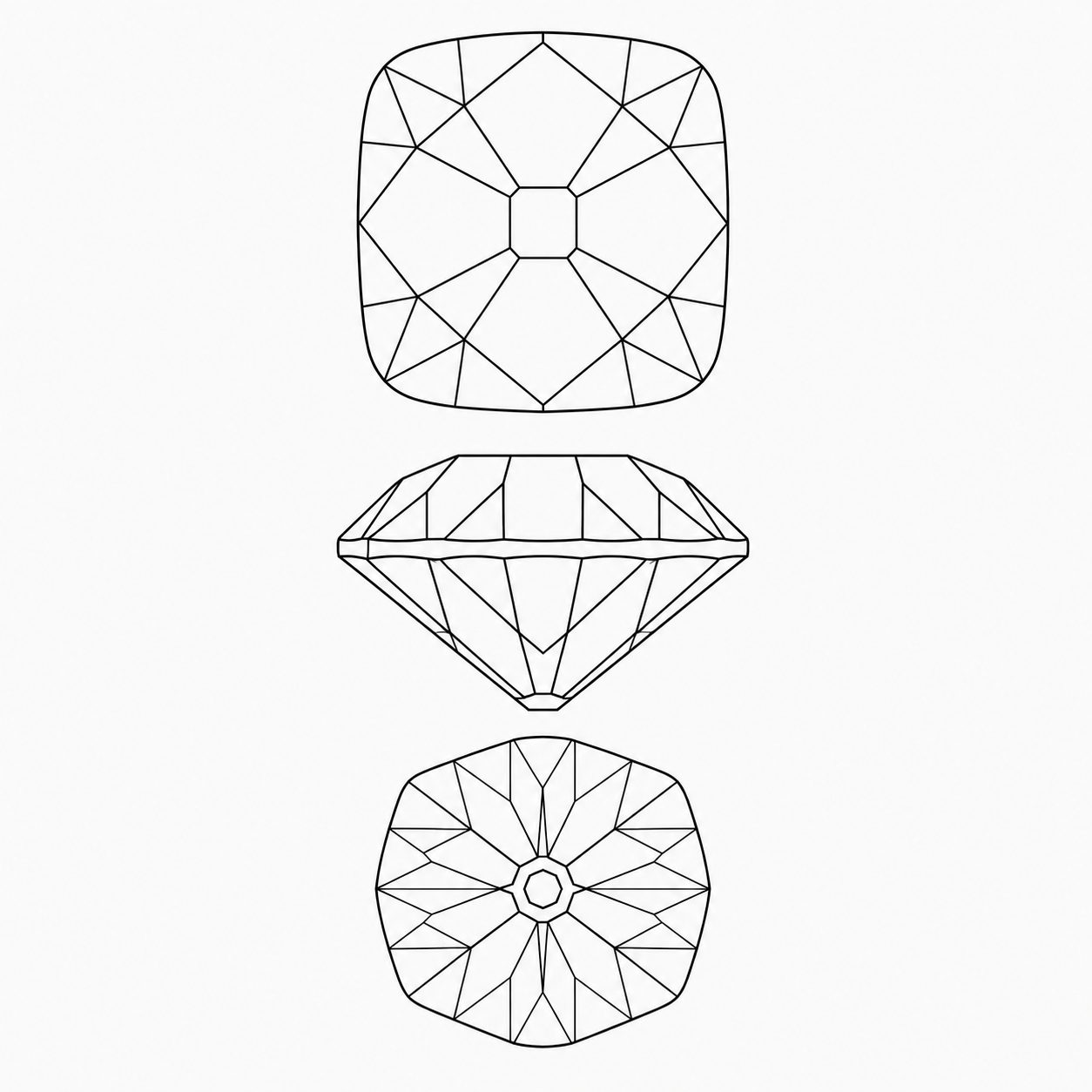
The old mine cut is one of the earliest brilliant-style diamond cuts. It typically has 58 facets when the culet is included. By comparison, a modern round brilliant usually has 57 facets, as it generally ends in a point rather than a culet facet.
An old mine cut typically features a smaller table, a higher crown and larger, broader facets, which give the diamond a deep and distinctive appearance. The lower part of the stone consists of a deeper pavilion, often ending in a visible or open culet.
The table is the flat facet at the top of the diamond. The crown is the upper section above the stone’s widest edge, while the pavilion is the lower section. The culet is the small facet at the very bottom of the diamond, in place of a pointed tip.
Old Mine Cut vs. Cushion Cut, Old European Cut and Modern Round Brilliant
The old mine cut is most commonly confused with the more modern cushion cut and the related old European cut. Their differences are easiest to understand in a direct comparison:
As a general rule, old mine cut diamonds tend to have a squarer, more irregular outline, while old European cuts and modern round brilliants are typically rounder and more symmetrical.
When Did the Old Mine Cut Originate?
The old mine cut became widespread during the 18th century and remained one of the most common diamond cuts until the end of the 19th century. It was later followed by the more regular old European cut and eventually by the modern round brilliant.
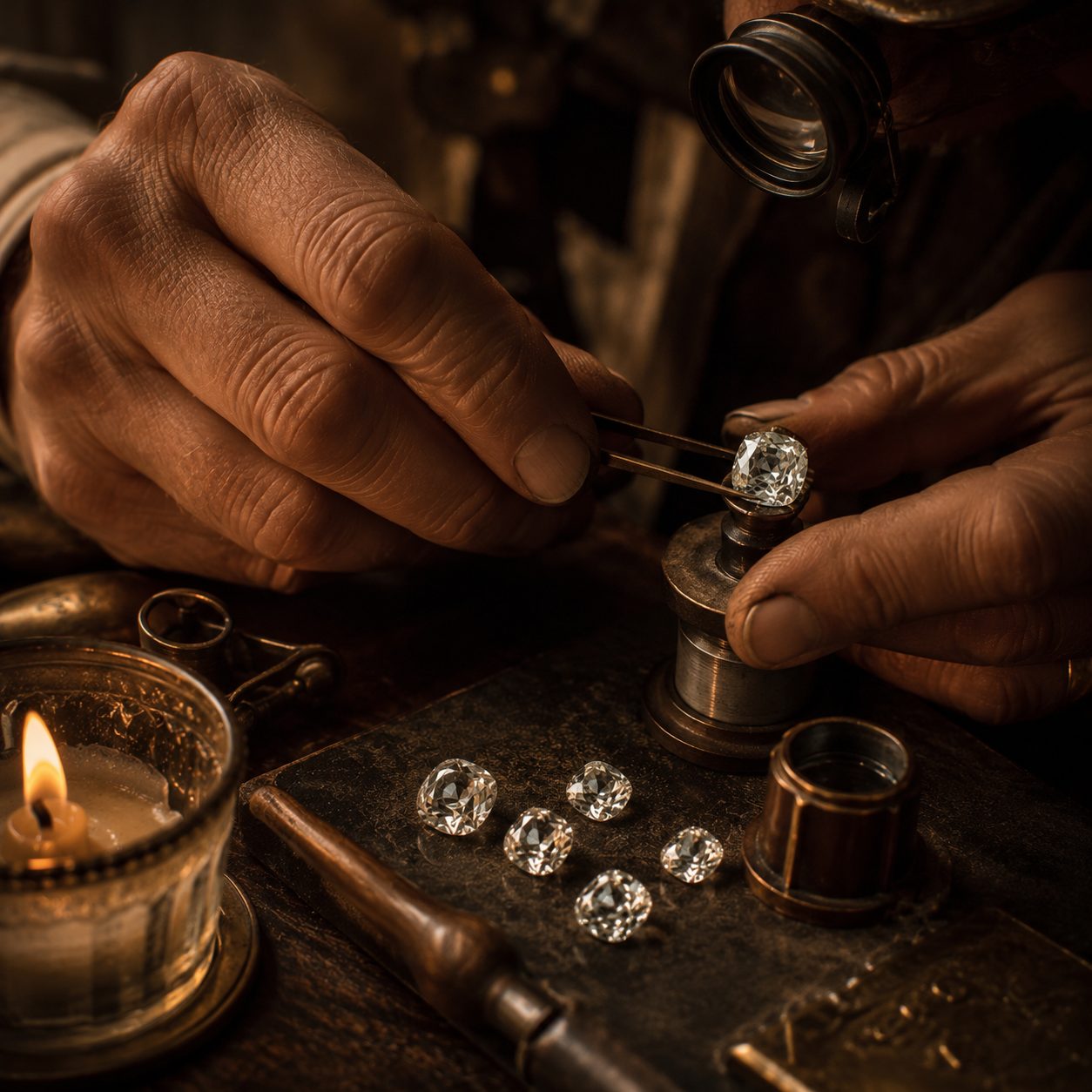
The cut developed at a time when interiors were lit by candles and gas lamps. Its large facets were particularly effective in this kind of soft lighting, producing broad, distinctive flashes of light.
The name refers to the “old” diamond mines and became established towards the end of the 19th century, when newly discovered African deposits began to replace the older diamond sources in Brazil and India.
What is an old mine cut?
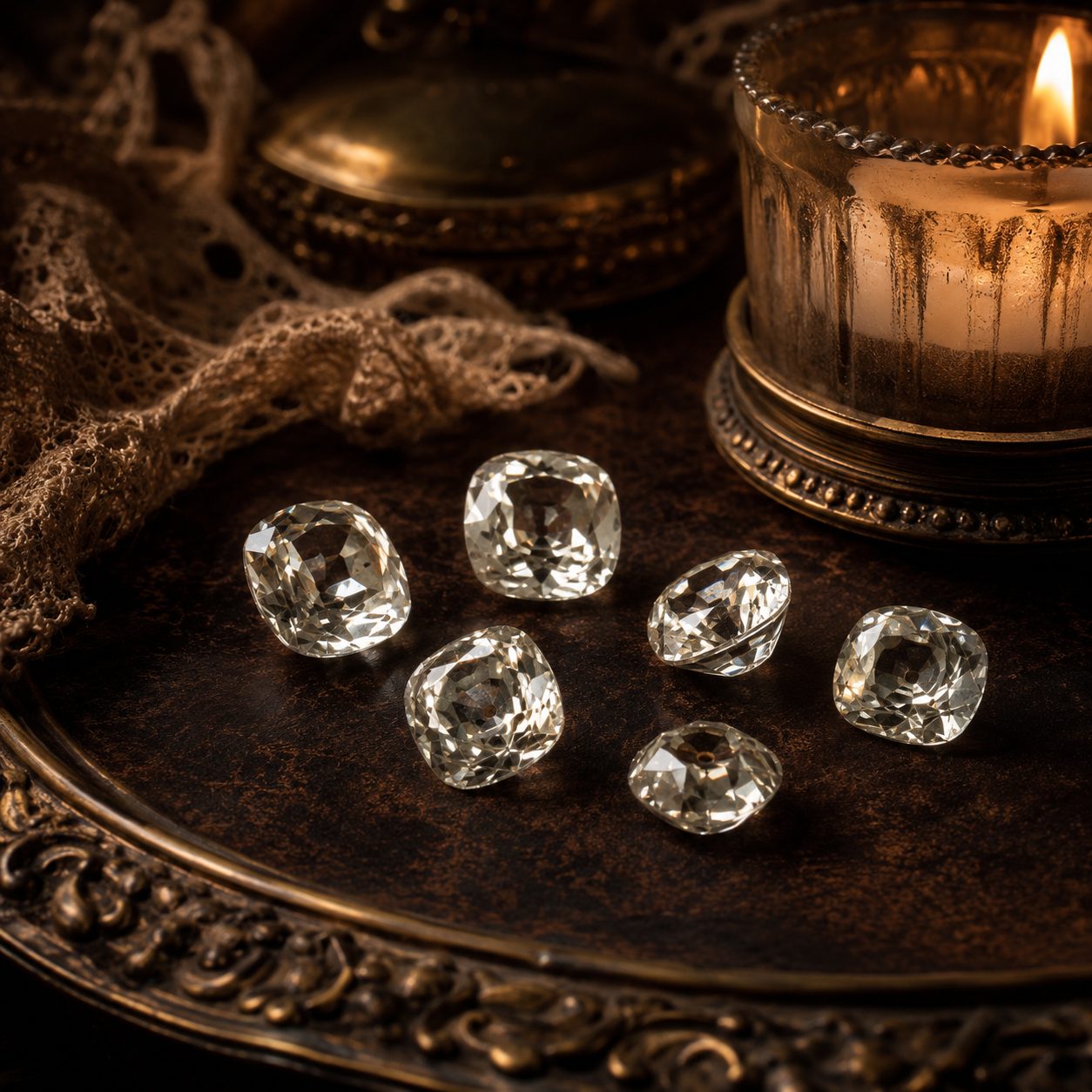
The old mine cut is one of the earliest brilliant-style diamond cuts, widely used during the 18th and 19th centuries. It has a softly squared shape with rounded corners, a high crown, broad facets and a visible or open culet, creating a soft yet distinctive sparkle.
What is the difference between an old mine cut and a modern round brilliant?
The old mine cut is a historic, hand-cut diamond with a cushion-like shape, broad facets and a visible or open culet, giving it soft, larger flashes of light. In contrast, a modern round brilliant is precisely symmetrical and produces a brighter, more even sparkle. Overall, the old mine cut has a more individual, vintage character.
What cut is the diamond in Taylor Swift’s engagement ring?
Taylor Swift’s engagement ring features an old mine brilliant-cut diamond with an elongated cushion-shaped outline. The ring helped bring renewed attention to this historic diamond cut.
Is an old mine cut suitable for an engagement ring?
Yes. Its broad facets, soft flashes of light and distinctive shape give it a romantic, timeless appearance, making it a popular vintage-inspired alternative to the modern round brilliant.


