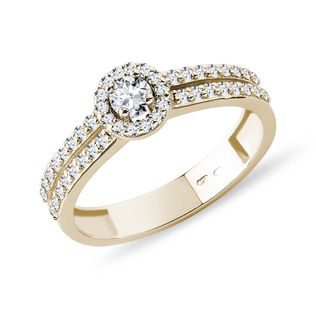
It may just be a small stamp inside a ring, on an earring post, or on the clasp of a necklace but for you, it’s the most important thing about the jewelry because it’s a guarantee of its authenticity, purity, and origin. In this guide, we will show you how to read hallmarks and we’ll also explain all the information you can find out from them.
- What is a hallmark and why you should care about it
- Where to find the hallmark on jewelry
- The various types of marks on jewelry
- The purity of gold and silver
- The national Assay Office hallmark
- The maker’s (sponsor’s) mark
- The fineness (purity) mark
- Why you won’t find all three marks on every piece of jewelry
- KLENOTA and the Assay Office
What is a hallmark and why you should care about it
A hallmark is an official mark stamped into a precious metal that guarantees to the customer the authenticity, origin, and purity of the jewelry. It is independent confirmation that the metal matches the description of the item.
In the Czech Republic, hallmarks are governed by the Convention on the Control and Marking of Articles of Precious Metals which sets out clear rules for jewelry makers as well as sellers. This means that you as a buyer have peace of mind when it comes to buying jewelry. At KLENOTA, compliance with these rules is a matter of course.
Where to find the hallmark on jewelry
Hallmarks are stamped in the least visible places so as not to interfere with the design of the jewelry:
The various types of marks on jewelry
There are three types of marks or stamps that you’ll find on jewelry made in the Czech Republic. But not all three may be present on a piece of jewelry and we’ll explain why below.
- The national Assay Office hallmark – this hallmark is guaranteed by the government.
- The fineness (purity) mark – a numeric code indicating the fineness of the metal.
- The maker’s (or sponsor’s) mark – the stamp of the maker who made the jewelry.
The purity of gold and silver
The purity of both is expressed as a percentage of the actual precious metal in the overall alloy. Here is an overview of the most common codes:
- Pure gold (999/1000) is practically never used in jewelry because it is too soft and any piece made out of pure gold would quickly scratch and bend out of shape. This is why gold is mixed with other metals.
- 925/1000 is sterling silver. When it is mixed with other metals (most often copper), it gains the required level of hardness and durability that’s needed for jewelry.
The national Assay Office hallmark
The national Assay Office hallmark is really a form of independent verification. It states the type of metal, its purity, and the approximate age of the jewelry using a pictorial symbol. The symbols used have changed over time which means that you’ll find a different hallmark on your grandmother’s ring to that on a new piece of jewelry. Current hallmarks and stamps even reveal which workshop stamped them.
The hallmark on jewelry is stamped by the Government Assay Office and is mandatory for:
- gold jewelry where the weight of the pure gold is greater than 0.52 g,
- silver jewelry which weighs more than 3.49 g.
The maker’s (sponsor’s) mark
There are two types of marks that denote the origin of a piece of jewelry as follows:
- The maker’s mark - every goldsmith or company that’s registered with the Assay Office has one and each mark is unique to that maker only.
- The responsibility (import) mark– this is the mark of the entity that imports jewelry from abroad and sells it in the Czech Republic.
What does the KLENOTA maker’s mark look like?
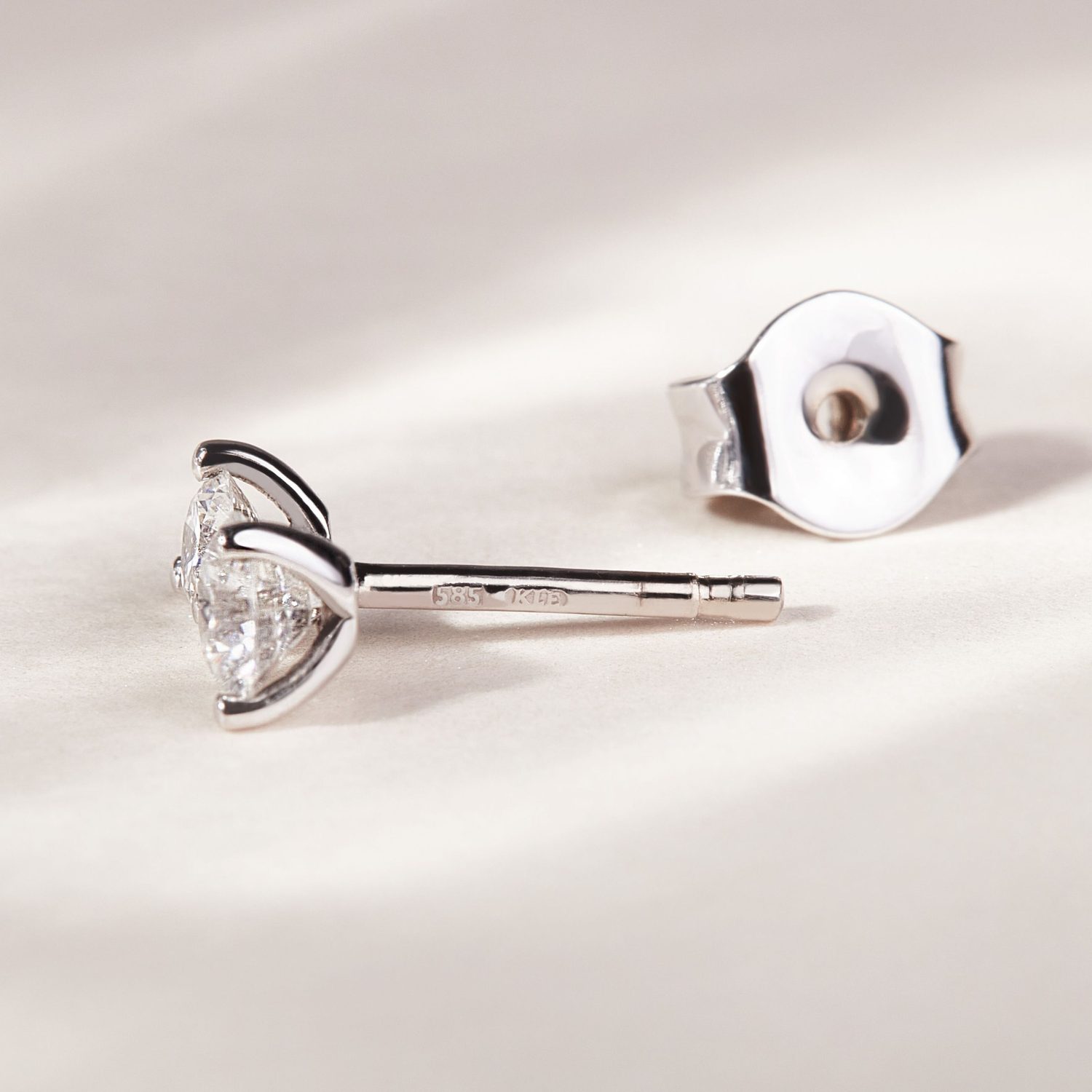
All our jewelry carries a maker's mark that consists of the letters "KLE" in an oval. If you see this mark on a piece of jewelry, you can be sure it was created in our studio.
The fineness (purity) mark
The fineness mark is a three-digit numerical code that allows you to quickly identify the type of metal and its purity. With gold, you’ll most commonly see the code 585 (or 585/1000) for 14 karat gold or 750/1000 for 18 karat gold. For silver, it is usually 925/1000.
Why you won’t find all three marks on every piece of jewelry
This is where confusion most often arises, so let’s summarize it simply:
- If a piece of jewelry is stamped with a national Assay Office hallmark, it may not need a fineness mark because information about its fineness is already included in the national hallmark.
- Some lighter pieces of jewelry (below the weight threshold) are not required to carry an Assay Office hallmark. In such cases, however, they must at least be stamped with a fineness mark.
So if you don’t find all three stamps on your jewelry, it doesn’t mean that there’s anything wrong. It simply depends on the weight and type of jewelry.
KLENOTA and the Assay Office
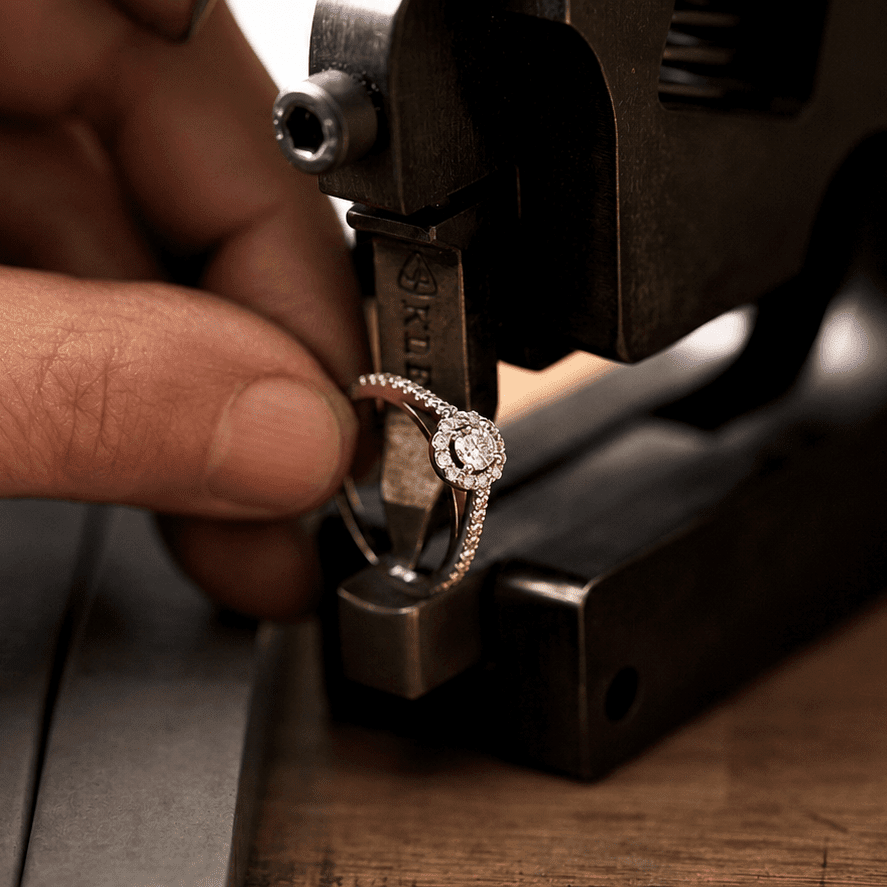
KLENOTA Jewelry has had an agreement with the Assay Office since August 24, 2008 which allows the Assay Office to make spot check purchases online of its goods. This means that we are listed among the entities that the office regularly audits for compliance with the relevant regulations.
Every piece of jewelry sold by us thus is thus governed by the same rules as any other jewelry in the Czech Republic which has been properly hallmarked.
What does the hallmark 585 mean?
The hallmark 585 (585/1000) stands for 14 karat gold—an alloy that contains 58.5% of pure gold in it. The remainder consists of other metals that make the gold more durable.
What does 925 mean on silver jewelry?
The stamp 925 (925/1000) denotes sterling silver which contains 92.5% of pure silver. It is the most common purity found in contemporary silver jewelry.
How can I tell if gold is genuine from its hallmark?
Real gold is stamped with a fineness code (585, 750 etc.) and, when it comes to heavier jewelry pieces, it is also stamped with the national Assay Office hallmark. Together, they confirm what type of metal it is and its fineness.
Does every piece of jewelry have to have an Assay Office hallmark?
No. Lighter pieces of jewelry below the weight threshold (0.52 g of pure gold, or 3.49 g for silver) are not subject to state hallmarking but they must at least be stamped with the fineness mark.
How do I recognize jewelry made by KLENOTA?
By the maker’s mark KLE in an oval stamped on the jewelry.